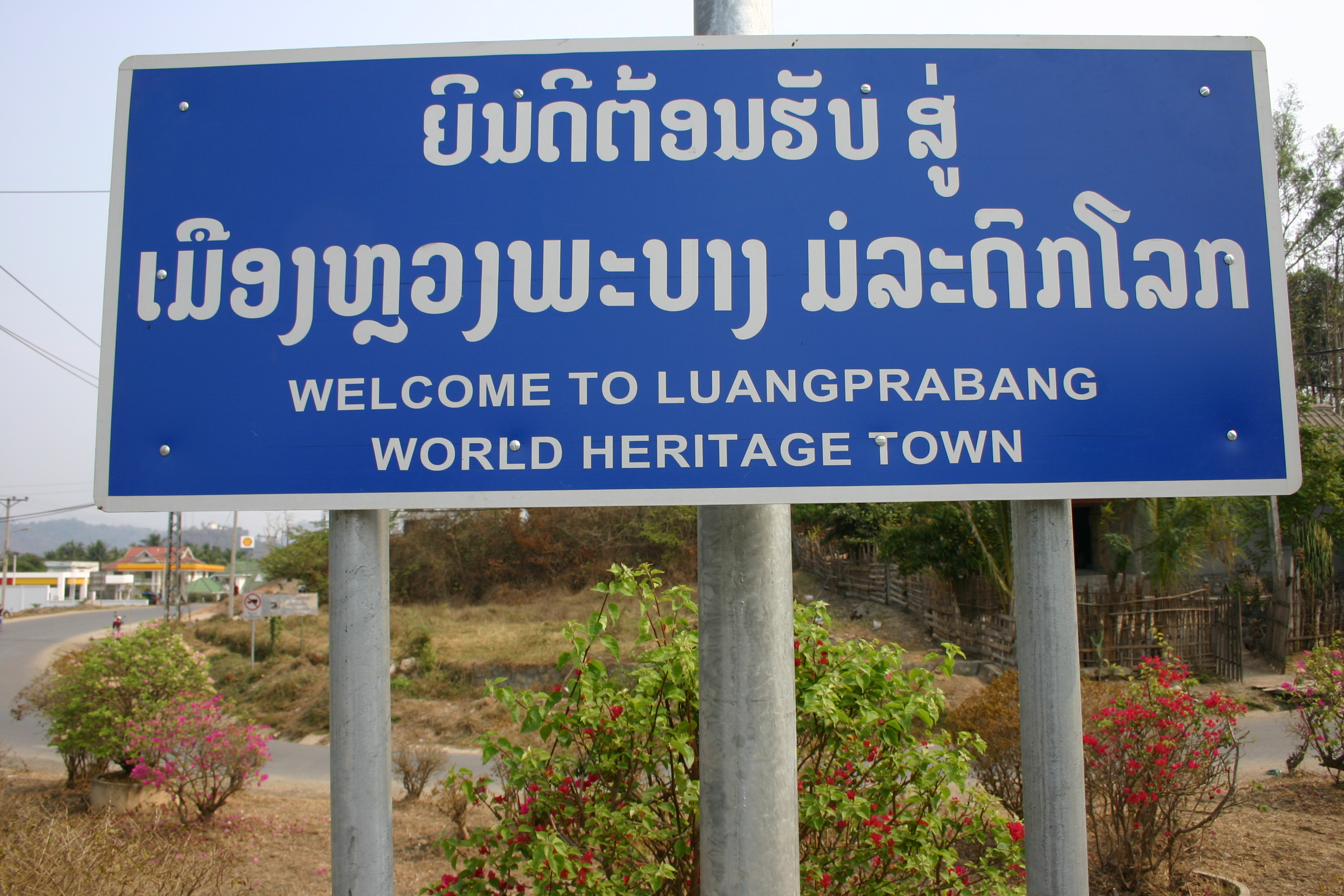
We're
now in Luang Prabang, the ancient mountain capital of the Kingdom of
Laos. Nowadays it's not the capital, and Laos is no longer a kingdom,
but a People's Democratic Republic. But the history of the city is everywhere
you look. We arrived last night, hunting for accommodation near the
Mekong, which flows on the west side of the town. Upriver is the border
with Thailand, and further the head of the river in the Chinese Himalayas,
and downriver is another border with Thailand, and eventually Vietnam
and Mekong Delta. The city is filled with temples, up to 700 years old,
and many, many monks – some of whom look as old as the temples.
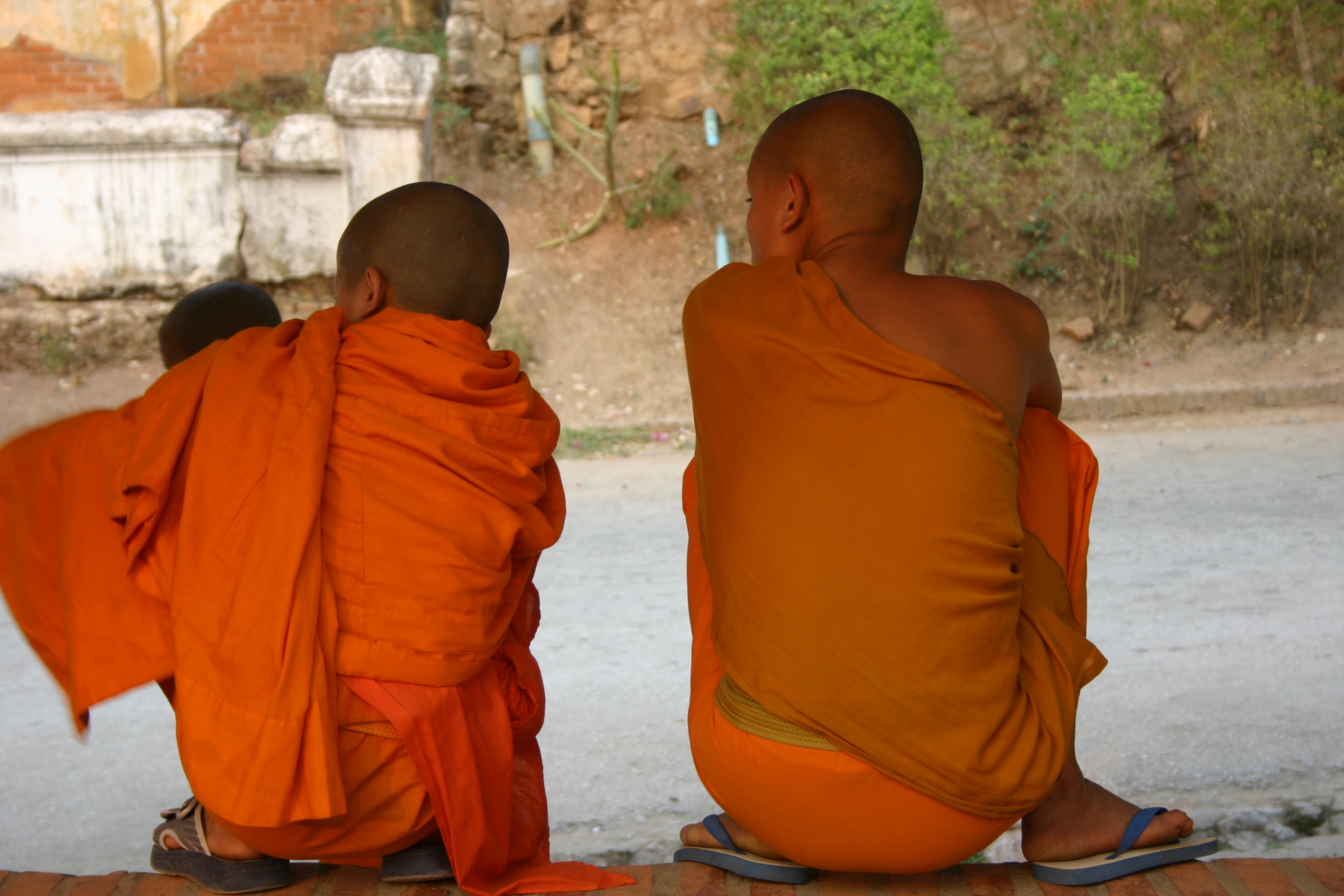
All
over the city you see monks, and novices. Not just around temples, but
dozens walking along the streets going to and from their lessons, and
even wading, knee deep, through the river to get home. At first, it
comes as a huge surprise to see so many, and we're constantly grabbing
our camera out of our bag to take another monk-shot, but by the end
of the day we've finally realised that there are so many opportunities
to see them, and to talk with them.
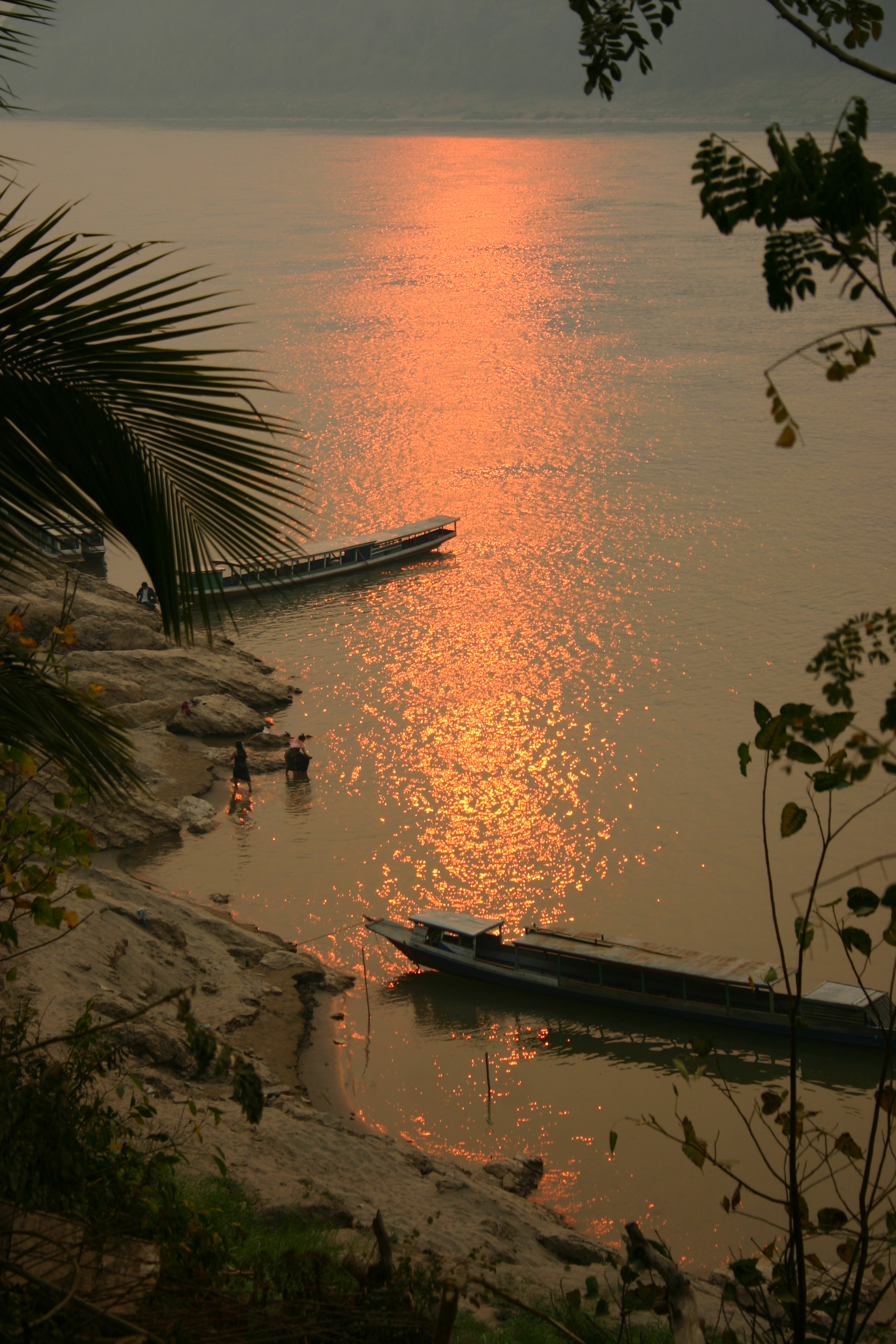
Although
it is smokey in the hills here too, every cloud has a silver lining
– or rather an orange lining. As the sun gets within an hour of setting
it starts to turn orange, and then deep red, up to half an hour before
it finally sets. It makes for an idyllic end-of-day, to sit on a terrace
looking down on the Mekong far below, with the red sun reflected back
up towards us.
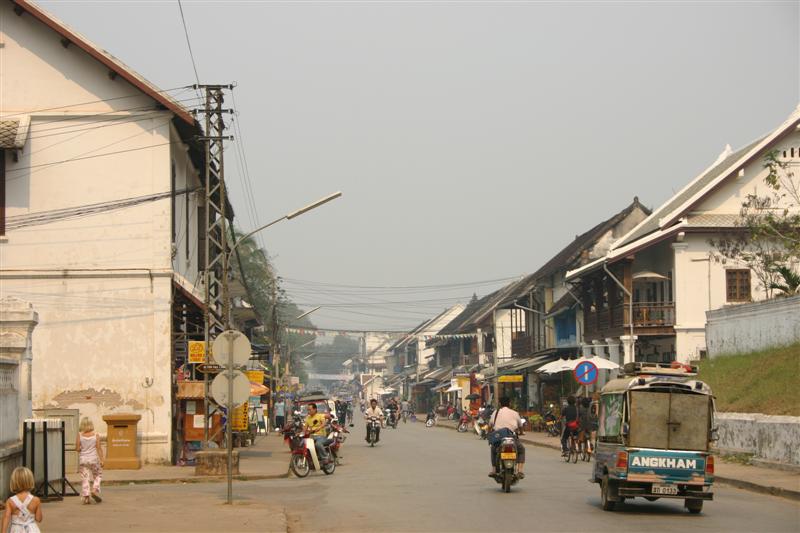
The
other thing that is obvious about Luang Prabang are the French influences,
from the old colonial power. As well as overhearing French tourists
for the first time, its also odd to see people sitting down at cafes
with baguettes and croissants. But all of this in a setting which seems
more like a remote Chinese city, because of the absence of cars and
heavy traffic.