Into the mountains, and past the guerrillas
 The
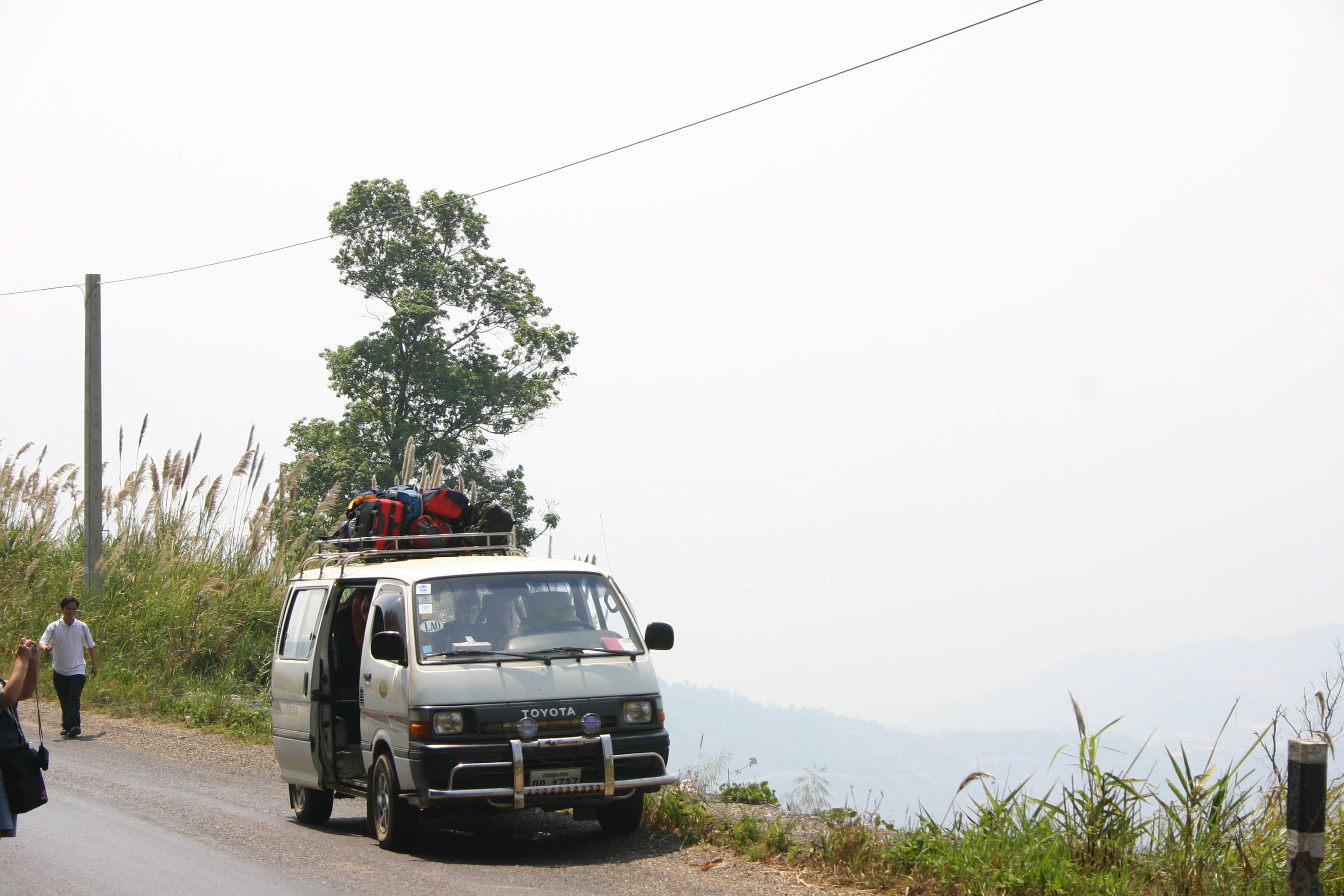
next step of our journey, further north, is to Luang Prabang, the ancient
capital city of Laos, sitting on the Mekong and surrounded by mountains.
The journey takes 6 to 10 hours, depending on how you elect to travel
there – local bus, air-con coach or minibus. We opted for the minibus
- the fastest option - which cost us a massive $8 each. Because four
of us were travelling together, along with 2 others from the same guest
house, we had our own minibus, rather than being cramped in with 20
other people – definitely a bonus when the road got windy and twisty
half an hour out of town. And it stayed that way for the next 6 hours!
The
next step of our journey, further north, is to Luang Prabang, the ancient
capital city of Laos, sitting on the Mekong and surrounded by mountains.
The journey takes 6 to 10 hours, depending on how you elect to travel
there – local bus, air-con coach or minibus. We opted for the minibus
- the fastest option - which cost us a massive $8 each. Because four
of us were travelling together, along with 2 others from the same guest
house, we had our own minibus, rather than being cramped in with 20
other people – definitely a bonus when the road got windy and twisty
half an hour out of town. And it stayed that way for the next 6 hours!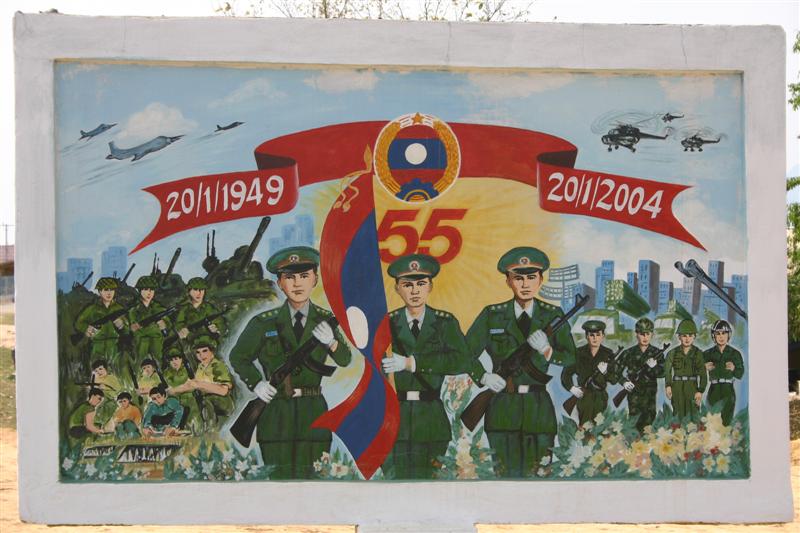
 Although
Laos was badly affected by the Vietnam War, there don't seem to be many
signs of militarization in this part of the country. Of course, there's
the usual posters and placards celebrating the great sacrifice made
by the army to forge the People's Democratic Republic, with goose-stepping
soldiers waving flags around, but in real life there are few uniformed
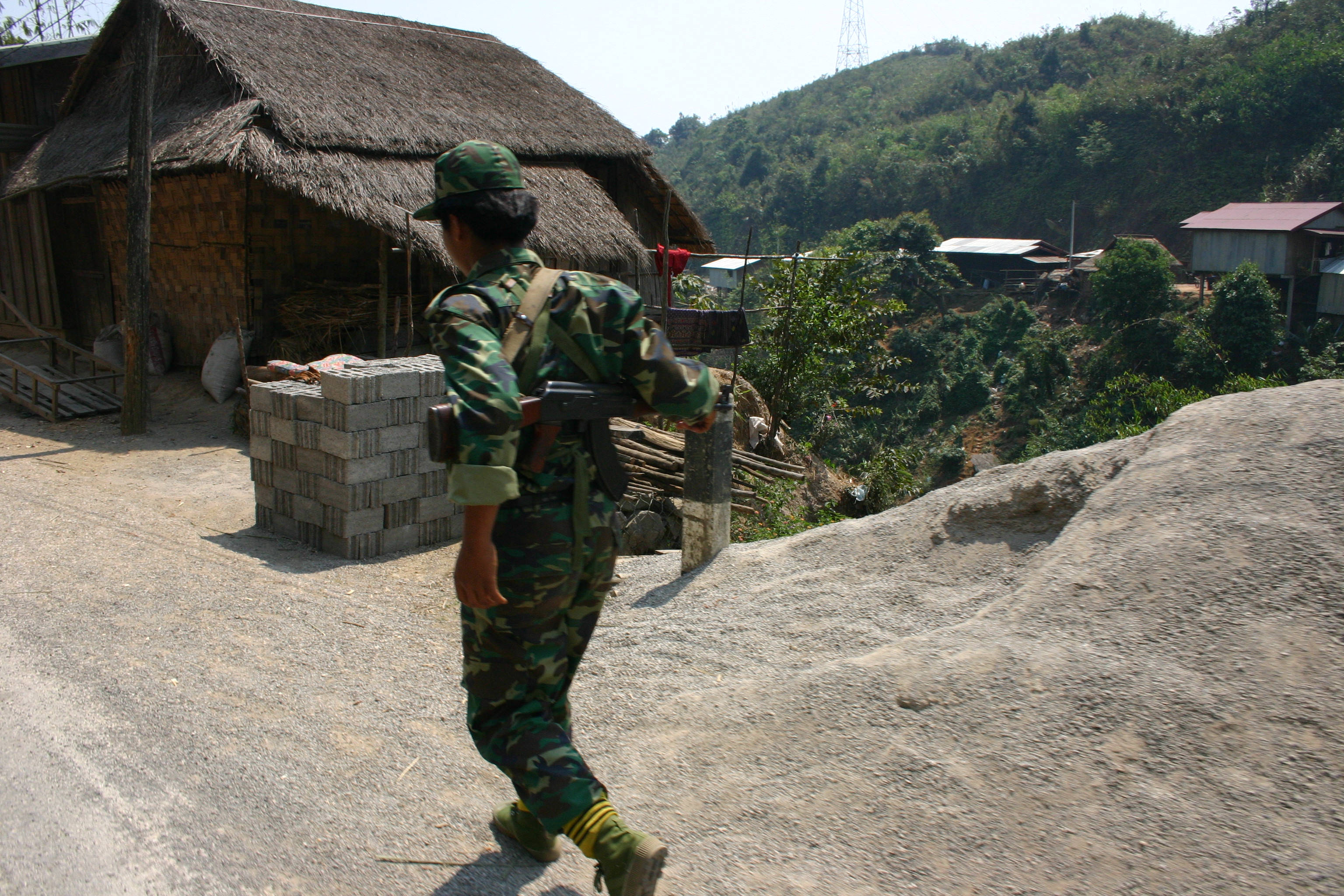
signs of the military. But in the hills north of the capital
is where the Mhong villagers have been fighting a sporadic campaign
against the government. A year ago it even got as far as some of the
rebels taking a few pot shots at passing buses. So now, armed militiamen
prowl the edges of the road, casually carrying AK47's and RPG's, in
a show of strength to keep the rebels away. And with armed men seems
to come corruption, with the minibus driver having to drop packets of
cigarettes at each militia post we passed.
Although
Laos was badly affected by the Vietnam War, there don't seem to be many
signs of militarization in this part of the country. Of course, there's
the usual posters and placards celebrating the great sacrifice made
by the army to forge the People's Democratic Republic, with goose-stepping
soldiers waving flags around, but in real life there are few uniformed
signs of the military. But in the hills north of the capital
is where the Mhong villagers have been fighting a sporadic campaign
against the government. A year ago it even got as far as some of the
rebels taking a few pot shots at passing buses. So now, armed militiamen
prowl the edges of the road, casually carrying AK47's and RPG's, in
a show of strength to keep the rebels away. And with armed men seems
to come corruption, with the minibus driver having to drop packets of
cigarettes at each militia post we passed.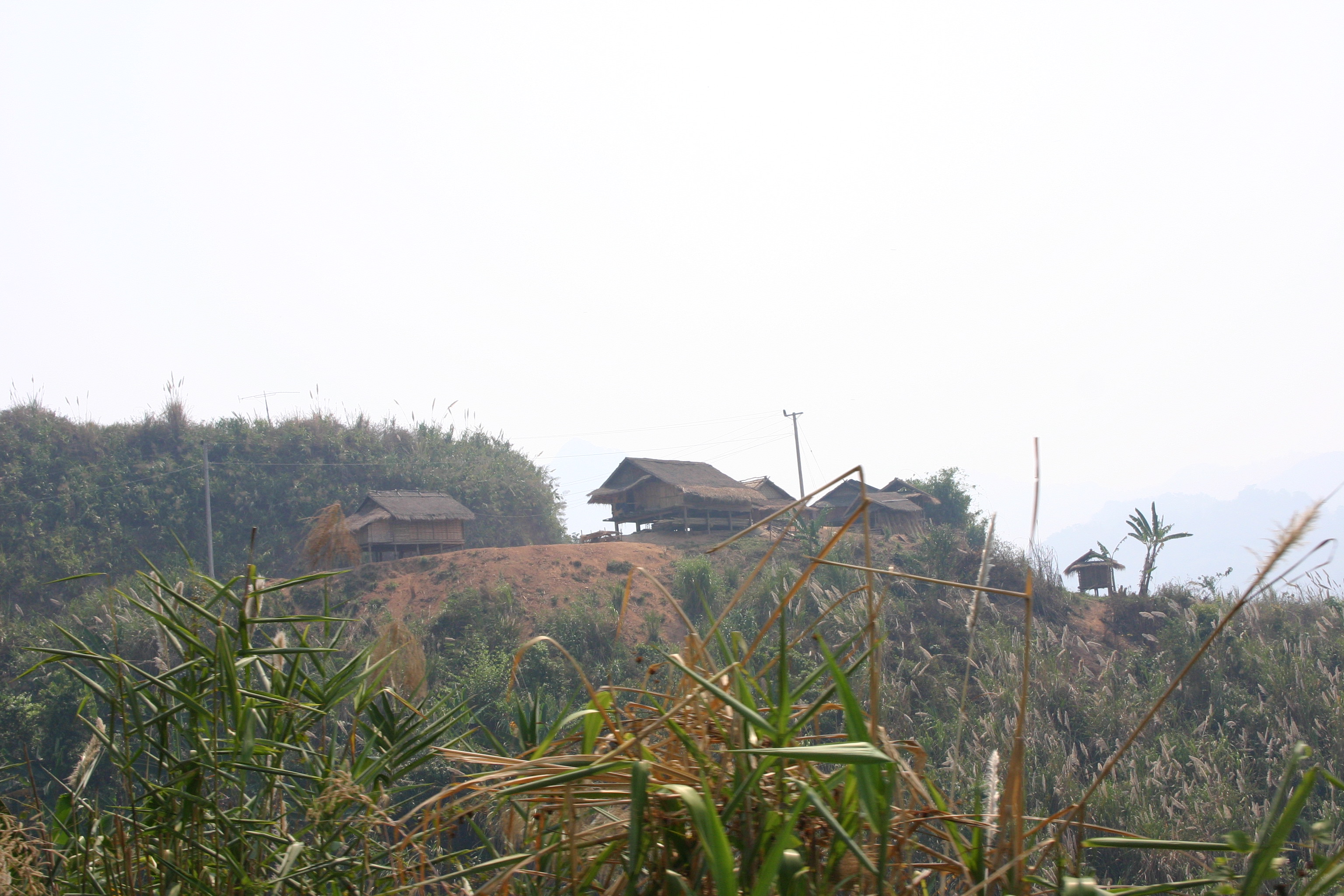
The Mhong (or some say Hmong) villages which we passed through we some of the most basic we'd seen anywhere. They all clung to the side of the road, perched over the mountainsides, because they could get electricity that way. But they had no running water or other conveniences, and seemed poorer than many of the villages we'd seen in India.
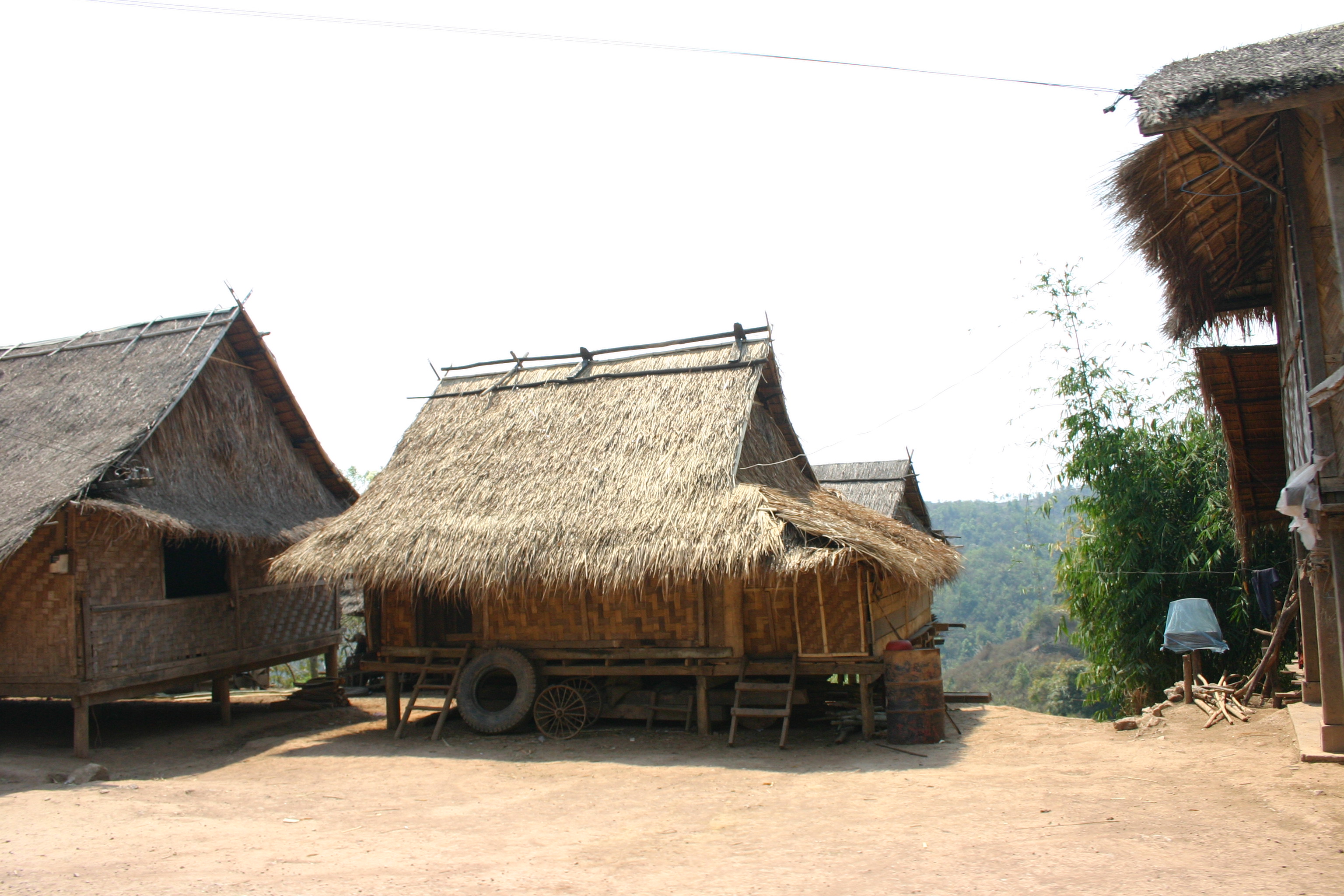 All
of the houses were really basic – reed walls surrounding floors built
on stilts. Out of the back was a drop of a few hundred feet, and out
of the front was the edge of the road – they literally stepped into
it as they left their front doors. In the afternoon, as we passed through
each village, the women were gathered at the pump, filling buckets with
drinking water, and washing themselves and their clothes right alongside
the road.
All
of the houses were really basic – reed walls surrounding floors built
on stilts. Out of the back was a drop of a few hundred feet, and out
of the front was the edge of the road – they literally stepped into
it as they left their front doors. In the afternoon, as we passed through
each village, the women were gathered at the pump, filling buckets with
drinking water, and washing themselves and their clothes right alongside
the road.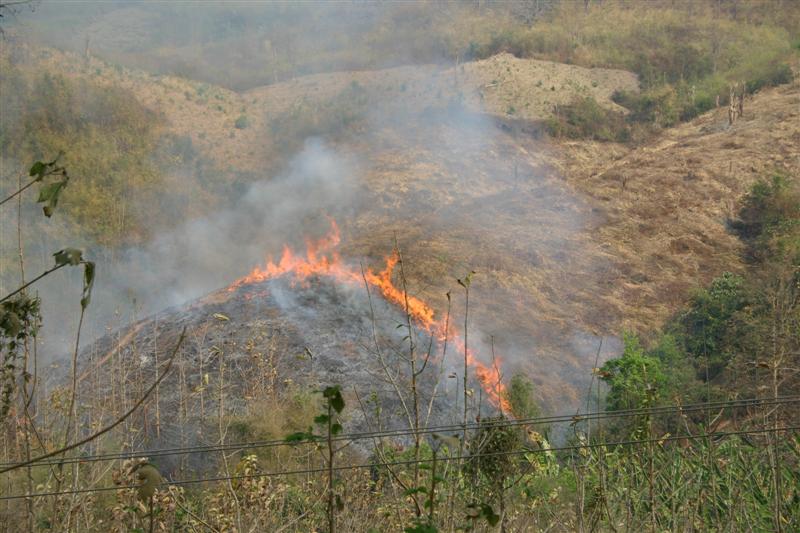 As
it is the middle of the dry season, the fabulous mountain views have
disappeared, to be replaced by the white smoky haze created by the slash-and-burn
fires in the area. Apparently we're luck – in March it gets so bad that
people are constantly coughing, and almost wears a handkerchief over
the faces. It was a sad journey, for all of these reasons, on top of
which was the road, a narrow strip of tarmac wide enough for a single
vehicle in many places, and twisting all over the ridges of the mountains.
We were all glad to get into Luang Prabang and get out of our
seats!
As
it is the middle of the dry season, the fabulous mountain views have
disappeared, to be replaced by the white smoky haze created by the slash-and-burn
fires in the area. Apparently we're luck – in March it gets so bad that
people are constantly coughing, and almost wears a handkerchief over
the faces. It was a sad journey, for all of these reasons, on top of
which was the road, a narrow strip of tarmac wide enough for a single
vehicle in many places, and twisting all over the ridges of the mountains.
We were all glad to get into Luang Prabang and get out of our
seats!