The gruesome side of Cambodia
There are lots of different ways to get around Phnom Penh - on the back of motorbikes; in cyclos which are chairs mounted on the front of bikes ridden by old, skinny men; on moped-powered tuk-tuks, or in saloon cars acting as taxis. For the many aid-workers in town, the vehicle of choice is a brand-new white Toyota Land Cruiser, with the organisation's logo on the side. For us today, we chose the taxi option - hiring a car for the whole day to take us around lots of sights in one go.
The Tuol Sleng Genocide Musem
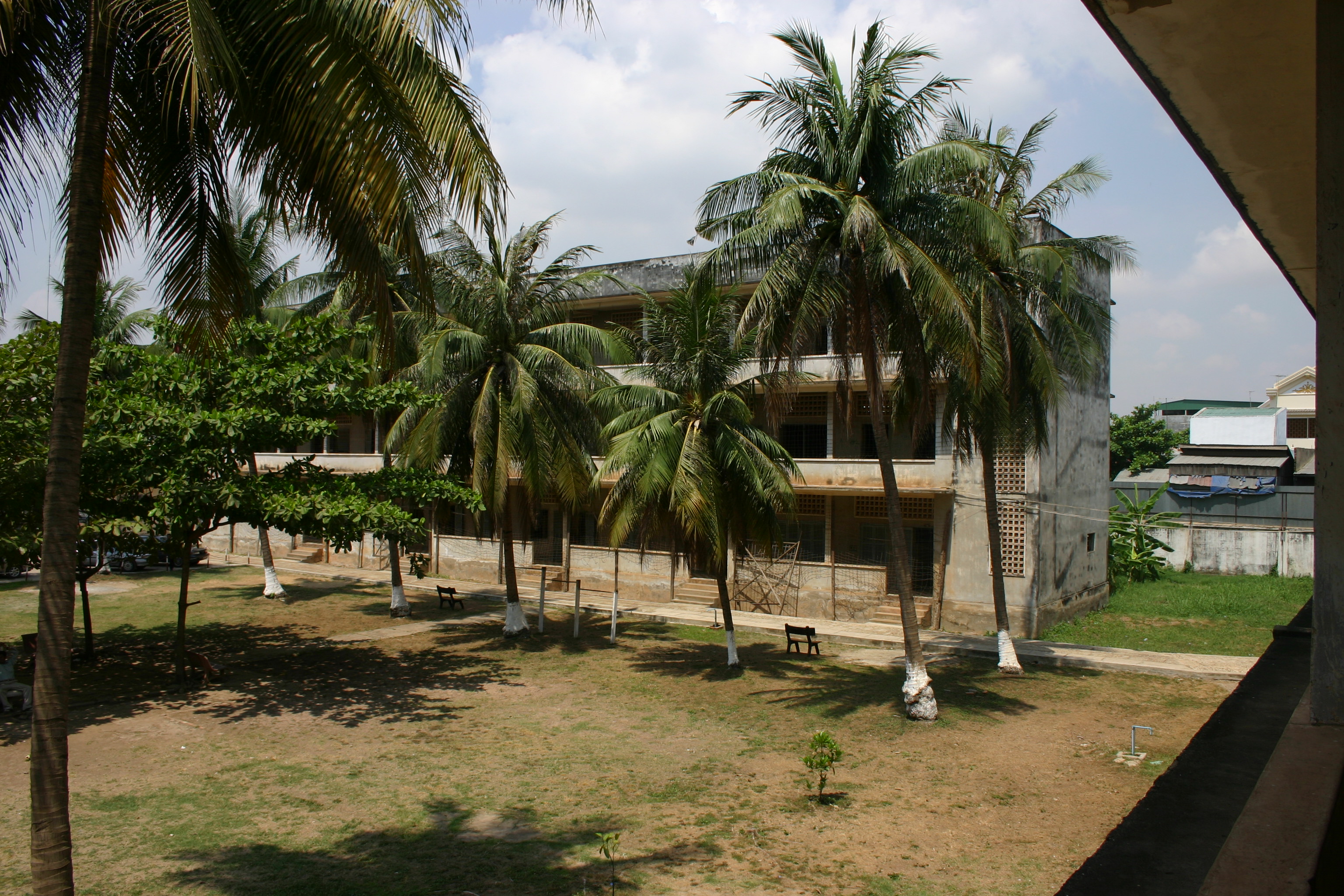 We started at Tuol Sleng, now a genocide museum, but formerly the Khmer Rouge S-21 Prison. Before the reign of the Khmer Rouge, and the abandonment of the city, it had originally been a secondary school, and from the outside, the buildings looked just like any other school we'd seen in Cambodia - except for the high barbed-wire fence surrounding it. Cambodian bookshops are full of fake copies of books, telling the stories of the Khmer Rouge days, and we've been able to read more about the history of Cambodia than other countries. After reading 5 books on the history, visiting Tuol Sleng provided a way to visualise some of the things we'd read about (just like driving past the French Embassy on the way into town, which had a pivotal role in the survival of many foreigners when the Khmer Rouge took over.
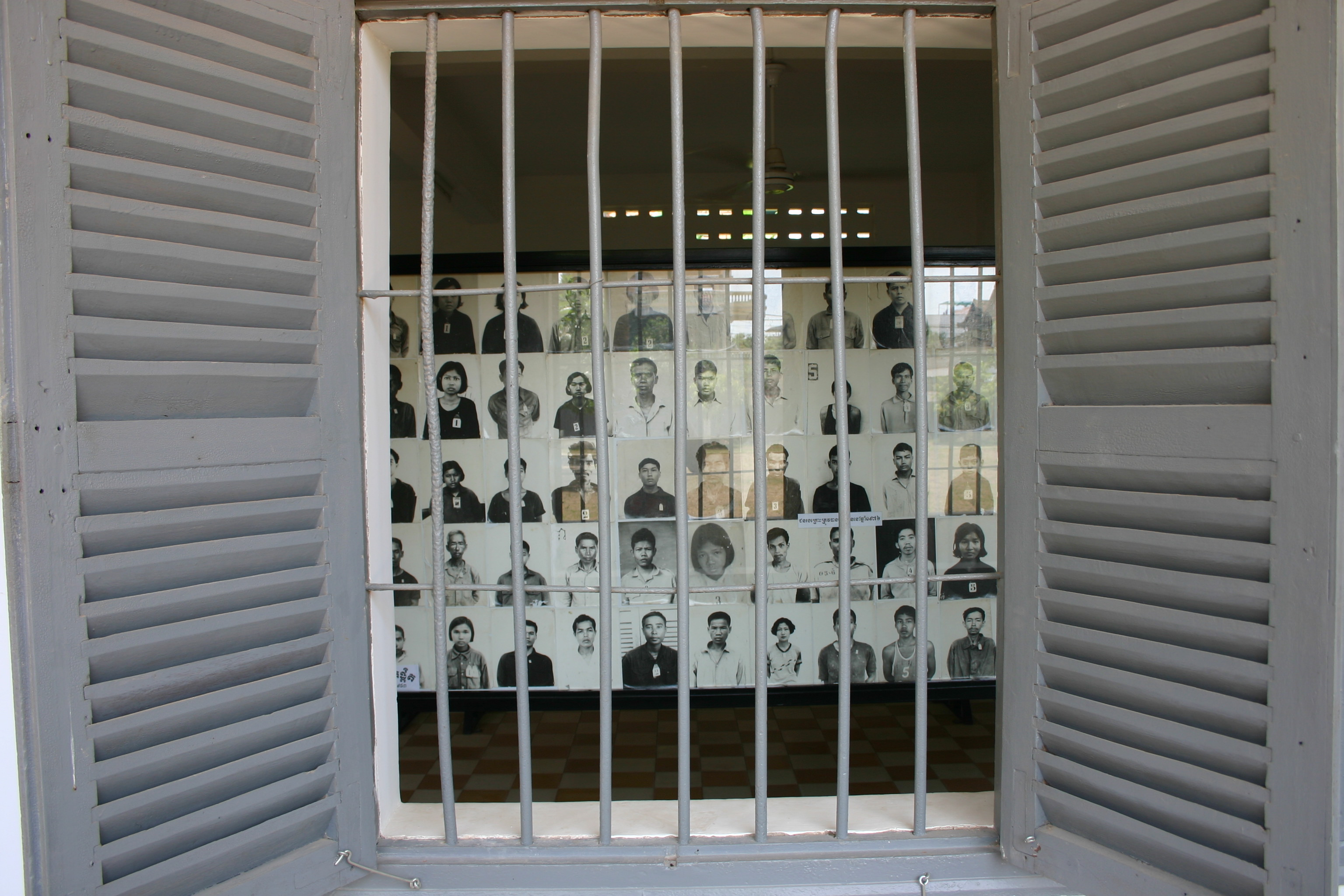 Approximately 12,500 prisoners were kept here, and all but seven were then taken to the Killing Fields to be killed and buried between 1976 and 1979. The tour of the prison, accompanied by a guide, highlighted the madness of the system, and also the systematic way that the genocide was carried out. Each victim was photographed and recorded as they were sent to their deaths, and many of these photographs survived, and are displayed inside the cell blocks. Alongside are photographs of some of the Khmer Rouge soldiers, many of them young boys and girls aged 10-20.
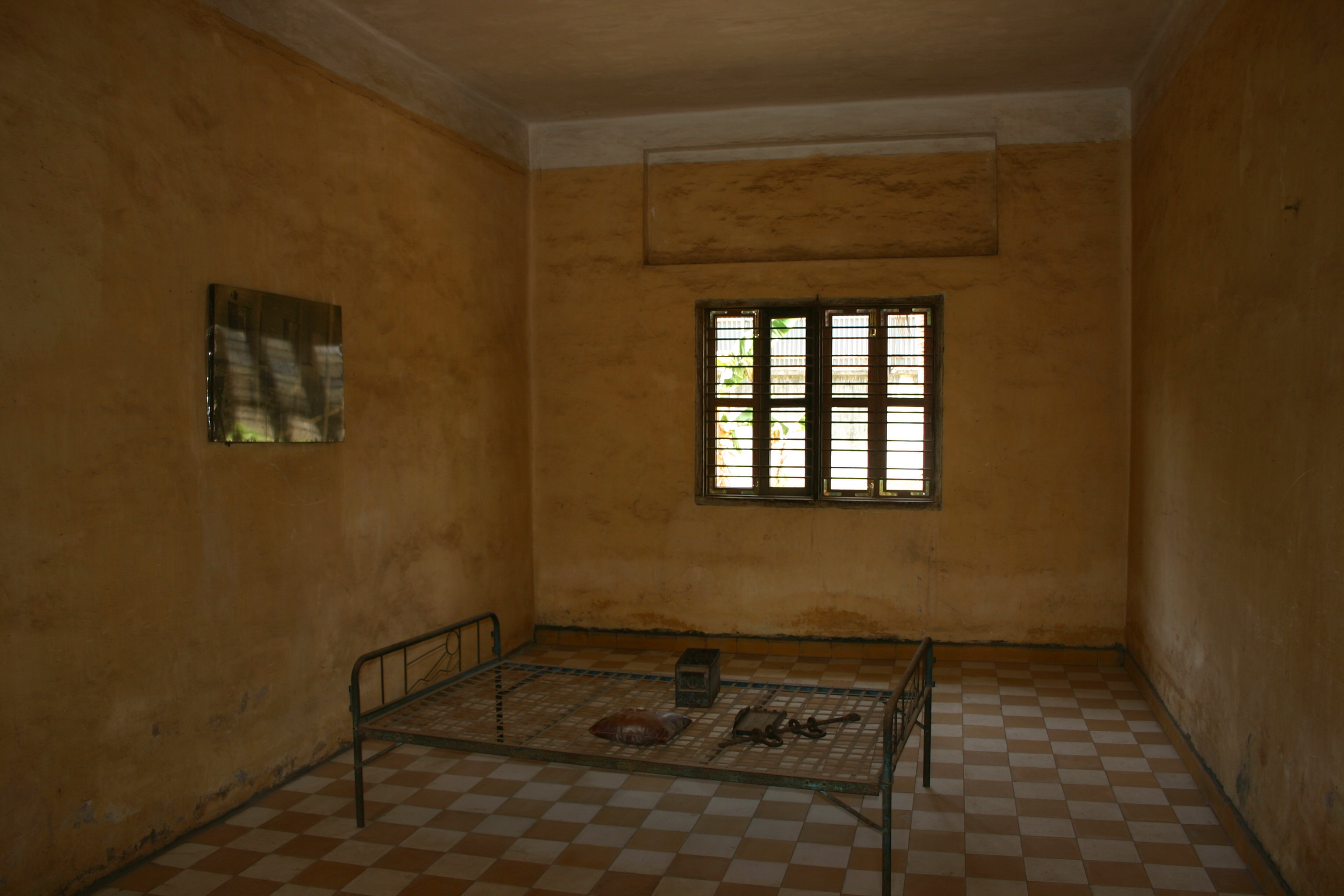 Perhaps one of the oddest parts, was the cell block A, in which the special prisoners were kept. On the ground floor, we large individual cells which were used for 'VIP' prisoners - high ranking government officials, and Khmer Rouge cadres who were suspected of being traitors - as the regime matured, it started to devour itself in a frenzy of paranoia, imprisoning, torturing and killing many of its own high-level officials and their families - including the man that ran the prison.
You might ask "Why would you take small children there?" After all, Charlotte is 8 and is able to understand much of what she is seeing, but how will it affect her? We felt it important to explain it to Charlotte in terms that she could understand, but without hiding it from her - after all, it is part of the reality of Cambodia, and everybody we have met in the country has been affected by it, and told stories of it (97% of the population are believed to have lost a close relative during the rule of the Khmer Rouge). Charlotte found some of the details from the guide were a bit "yucky", and came away with a strong sense of the unfairness of it all - especially that the perpetrators "got away with it". While some of leaders of the Khmer Rouge are still in jail, none have been tried, and most are free - including most of the prison's guards. In fact, the current prime minister is a former Khmer Rouge soldier. Who knows what Charlotte will remember of this in a year's time, but at the moment she has a fairly balanced view of it all, and is as equally horrified as anybody would be of what happened.
The Tuol Sleng Genocide Musem
We started at Tuol Sleng, now a genocide museum, but formerly the Khmer Rouge S-21 Prison. Before the reign of the Khmer Rouge, and the abandonment of the city, it had originally been a secondary school, and from the outside, the buildings looked just like any other school we'd seen in Cambodia - except for the high barbed-wire fence surrounding it. Cambodian bookshops are full of fake copies of books, telling the stories of the Khmer Rouge days, and we've been able to read more about the history of Cambodia than other countries. After reading 5 books on the history, visiting Tuol Sleng provided a way to visualise some of the things we'd read about (just like driving past the French Embassy on the way into town, which had a pivotal role in the survival of many foreigners when the Khmer Rouge took over. Approximately 12,500 prisoners were kept here, and all but seven were then taken to the Killing Fields to be killed and buried between 1976 and 1979. The tour of the prison, accompanied by a guide, highlighted the madness of the system, and also the systematic way that the genocide was carried out. Each victim was photographed and recorded as they were sent to their deaths, and many of these photographs survived, and are displayed inside the cell blocks. Alongside are photographs of some of the Khmer Rouge soldiers, many of them young boys and girls aged 10-20.Perhaps one of the oddest parts, was the cell block A, in which the special prisoners were kept. On the ground floor, we large individual cells which were used for 'VIP' prisoners - high ranking government officials, and Khmer Rouge cadres who were suspected of being traitors - as the regime matured, it started to devour itself in a frenzy of paranoia, imprisoning, torturing and killing many of its own high-level officials and their families - including the man that ran the prison.You might ask "Why would you take small children there?" After all, Charlotte is 8 and is able to understand much of what she is seeing, but how will it affect her? We felt it important to explain it to Charlotte in terms that she could understand, but without hiding it from her - after all, it is part of the reality of Cambodia, and everybody we have met in the country has been affected by it, and told stories of it (97% of the population are believed to have lost a close relative during the rule of the Khmer Rouge). Charlotte found some of the details from the guide were a bit "yucky", and came away with a strong sense of the unfairness of it all - especially that the perpetrators "got away with it". While some of leaders of the Khmer Rouge are still in jail, none have been tried, and most are free - including most of the prison's guards. In fact, the current prime minister is a former Khmer Rouge soldier. Who knows what Charlotte will remember of this in a year's time, but at the moment she has a fairly balanced view of it all, and is as equally horrified as anybody would be of what happened.
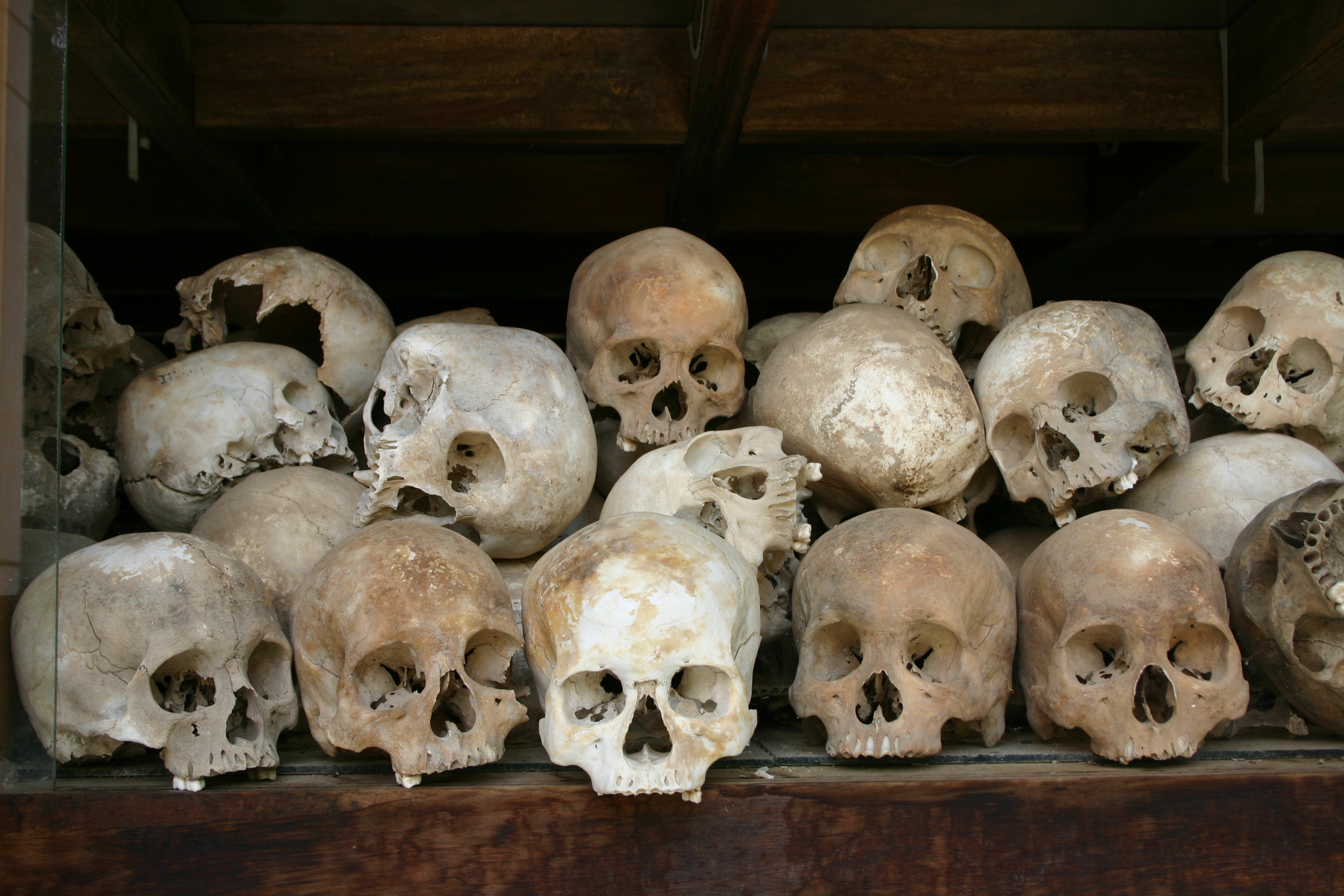 After the genocide museum we carried on out of the city to view the Killing Fields. This was where the prisoners were taken, before being killed and buried in mass graves. 9,000 skeletons have been uncovered, but a further third of the graves remain untouched. The burial pits themselves, just look like a building site, except for the signs identifying them and the scraps of clothes uncovered from the mud each rainy season. Alongside the area of the graves is a large stupa, with glass walls, containing the thousands of skulls and some of the clothes found on the victims.
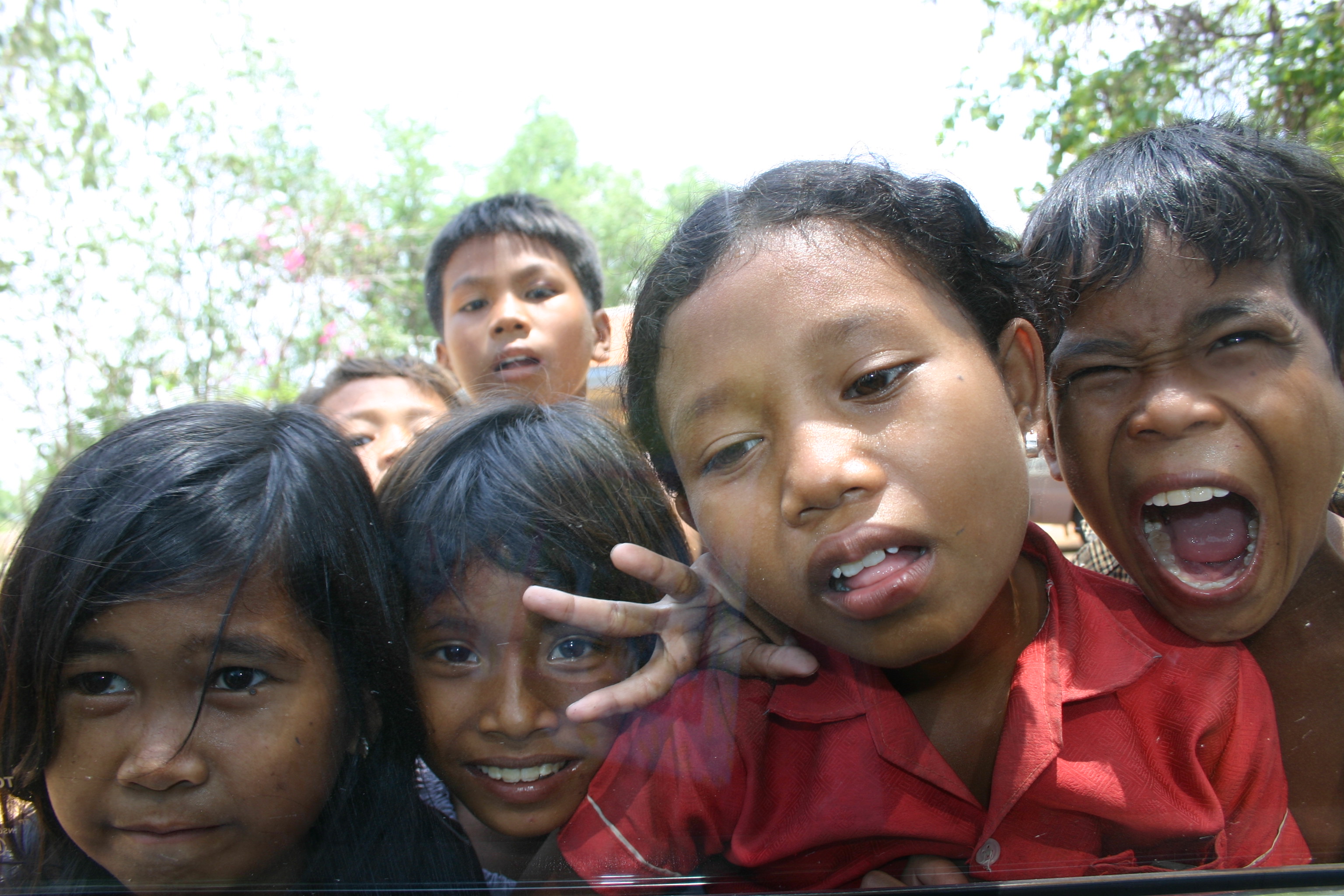 We'd left Emily in the car with the driver, as she'd been asleep when we arrived, and when we got back to the car it was surrounded by the small children who beg and sell things at every tourist site in Cambodia. They were all peering in the window at Emily, who'd woken up and was reading her book. Every time you arrive and step out of your taxi or tuk-tuk, you're immediately surrounded by a horde of children asking you to buy their postcards/fans/chopsticks/t-shirts or just begging. I would imagine that would be frustrating for tourists who are just here for a week or so, and haven't had time to adjust to the hassle of Asia. Fortunately, we've now been here long enough to get used to it, and although it was initially quite daunting and confusing for Charlotte and Emily, they've learnt to cope with all the pushing, shouting and touching that goes on.
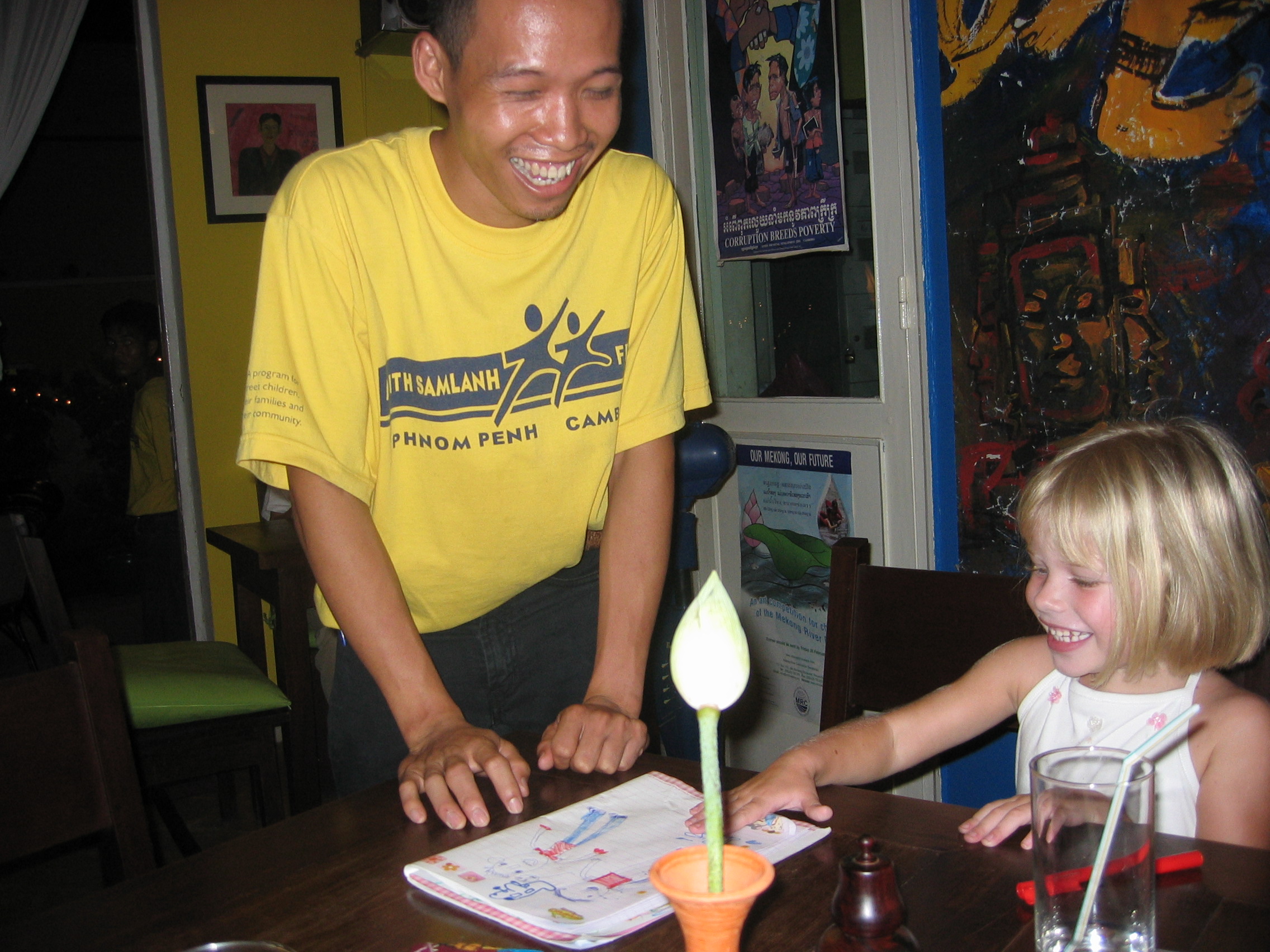 For dinner, we went to 'Friends the Restaurant', run by the