Yosemite National Park
It’s difficult to write about Yosemite without
using too many superlatives, so I’m not going to tell you about the
views, and the scenery and the breathtaking moments – I’ll show you
some photo’s of those, and you can see for yourselves. And if you want
to know about them you can go and find out in the your library (or even
come to Yosemite!). Instead, I’ll tell you about the things you won’t
find in a Yosemite Guide Book, and what we thought about them. But first,
a picture…
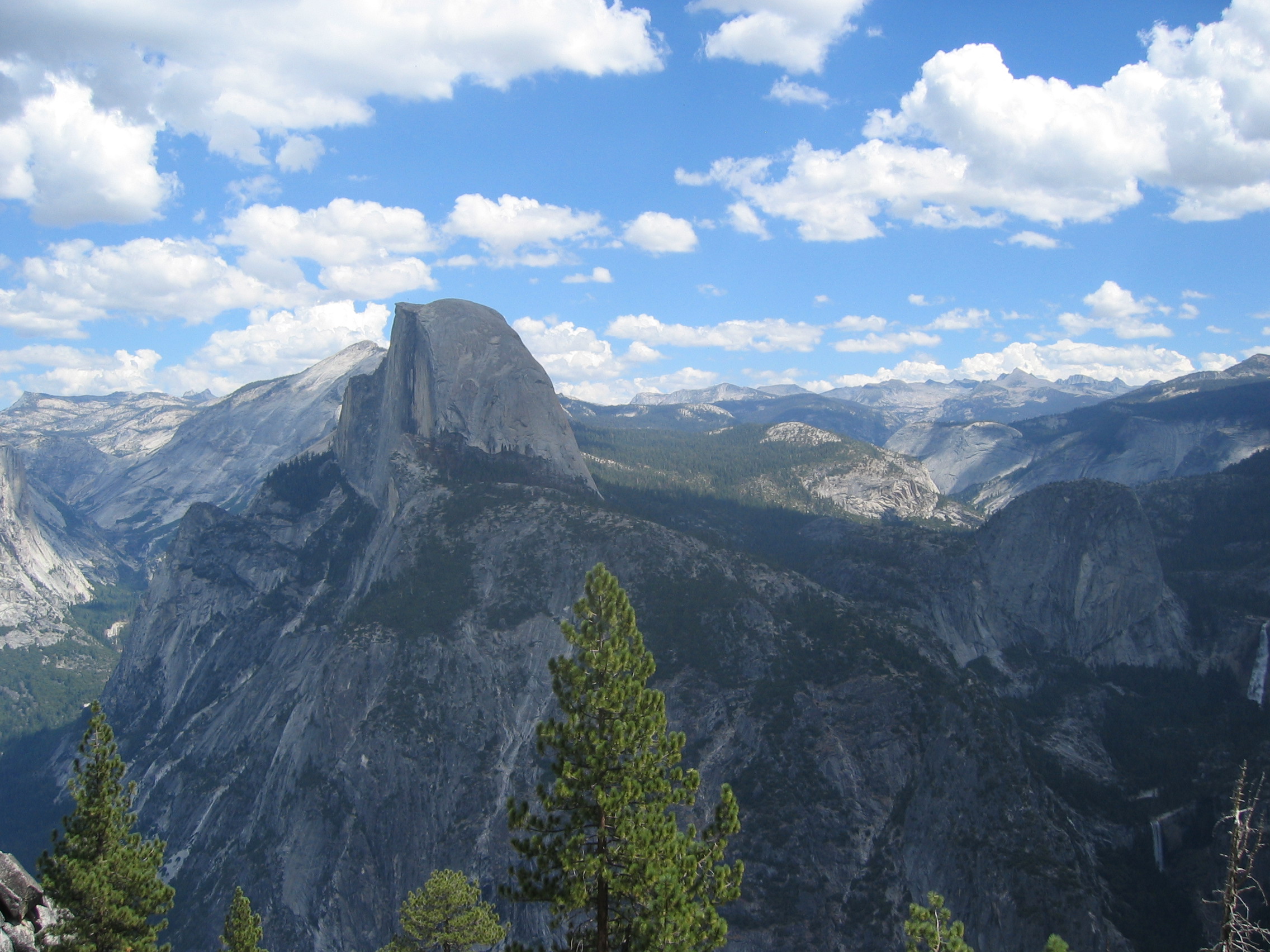
Of course there are mountains in Yosemite, and no trip would be complete with going up one and taking pictures. There is a big difference to last time we traveled. 10 years ago we were younger, fitter and didn’t have two small children with us. In New Zealand we were doing 50km hikes and climbing 1,600m mountains without too much preparation. But with the girls, we find that we’re really limited on what physical activity we can do with them. Normally we find that while one is ready to walk, the other isn’t – too tired, too hungry or just plain grumpy. Although we sometimes insist, and drag them along moaning and pleading, it does mean that it limits our options.
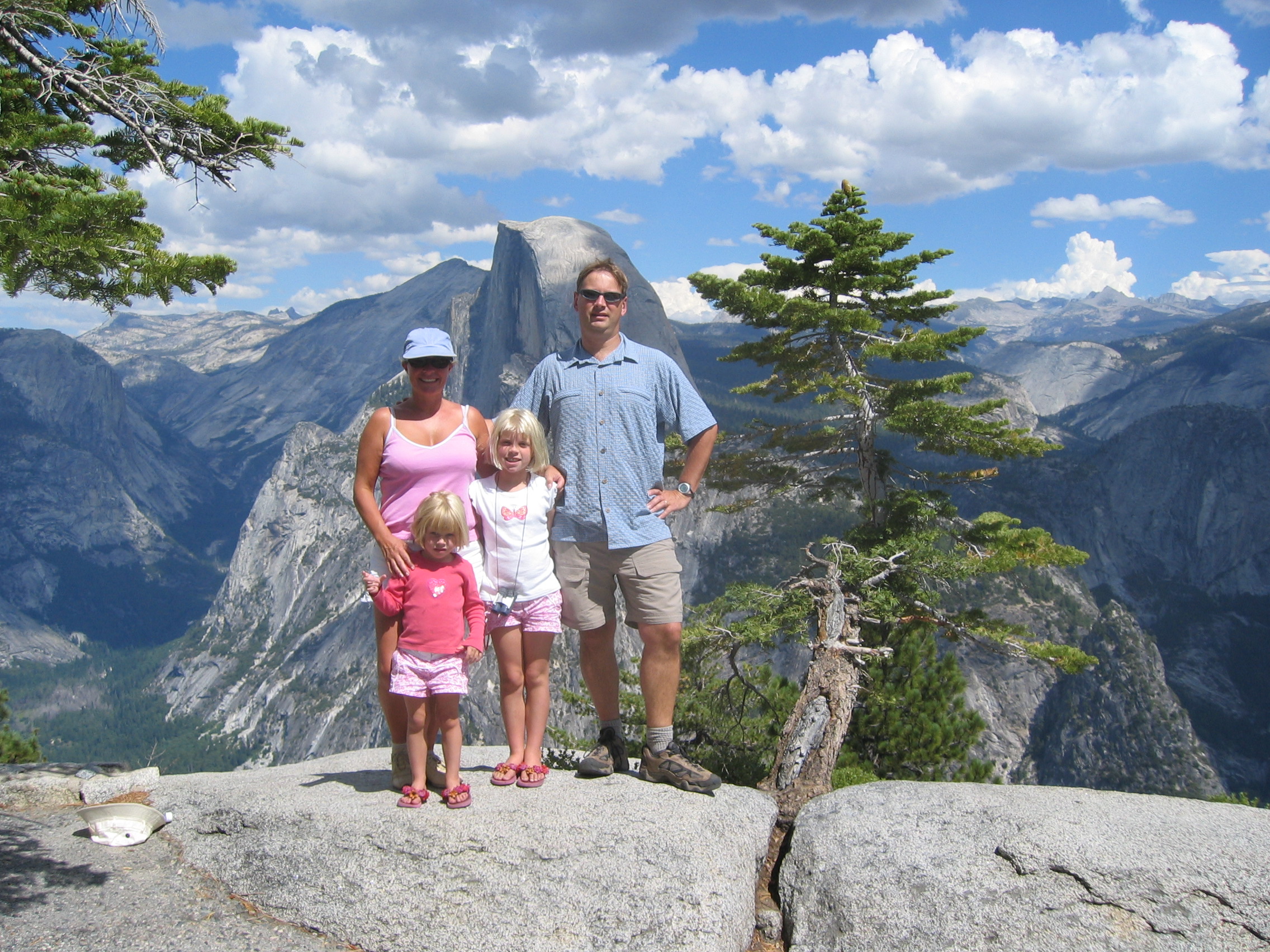 So
‘going up a mountain’ in Yosemite meant driving 30 miles up to Glacier
Point (to stand at the edge of a 1,000m vertical drop, 50m horizontally
from our starting point in the valley), rather than taking the four-mile
hiking trail.
So
‘going up a mountain’ in Yosemite meant driving 30 miles up to Glacier
Point (to stand at the edge of a 1,000m vertical drop, 50m horizontally
from our starting point in the valley), rather than taking the four-mile
hiking trail.
However, there are other things that we do that compensate. We all enjoy the wildlife spotting – in Yosemite there are lots of wild deer, that wander around the forests and meadows, and through the car parks. We also saw lots of squirrels and jays, which scavenge from the food. We saw raccoons one night, and a wild coyote strolling alongside the road twice. We didn’t see any bears, but there were plenty of bears around.
The bear problem in Yosemite is a big one – they are attracted to the valley floor by the amount of food available, and have learnt all kinds of tricks to get it. Signs all over the park warn you not to leave food unattended, and to always lock it into a bear-proof storage container. And cars don’t qualify! Food has to be taken out of cars, even the boot, and put into lockers provided in the car parks and camp sites. We weren’t allowed to store food in our tent (same reasons), and had another locker near the toilets (mmm, nice) to store food we wanted on the campsite. And we weren’t even allowed to temporarily take it up to the tent to eat it – it had to be eaten away from the tents. So we would end up eating breakfast on a picnic table near the restaurants rather than in our ‘room’. And these precautions didn’t extend just to food, but also to drink (Coke cans) and other fragranced items (like shower gel, toothpaste etc). It was a complete nightmare. It would be easy to think that they were paranoid about this, and being extreme, but the statistics speak for themselves – 800 cars a year broken into by bears in the park (‘broken into’ means that they’ll yank the doorframe away at the window, smash the window, and if the food’s in the boot, they’ll smash through the back seats into the boot). Some of them didn’t even have food in, but contained things like old food wrappers, crumbs in the car seats, or even the smell of a meal eaten in the car that evening! Somebody had warned us at Mammoth Lakes, and had told us to vacuum our car out before we went. Although we thought they were a bit over-cautious, we did it – and having seen what happens, I’m glad we did.
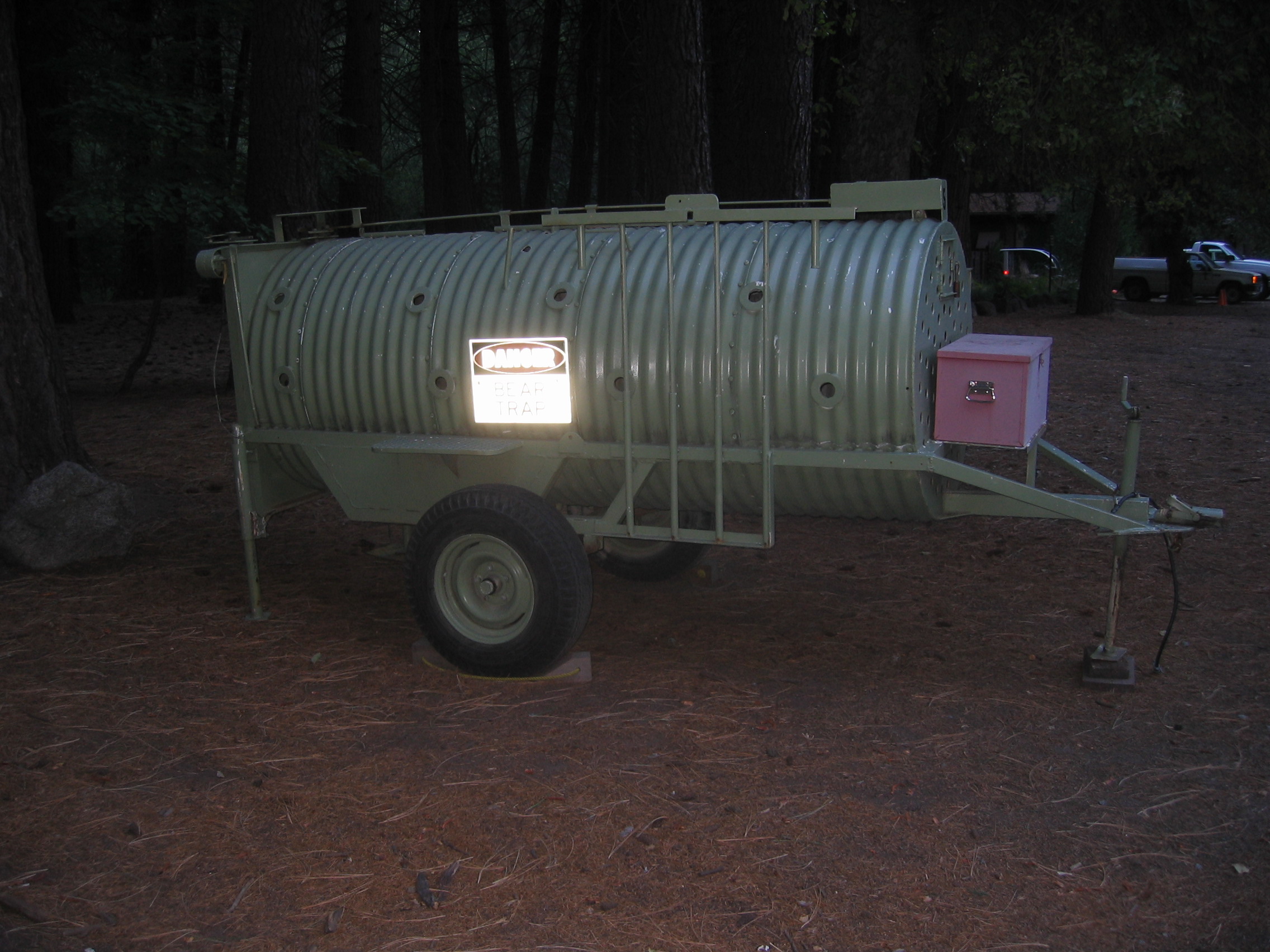
Anyway, a quick description of the photo above – the tube in the middle is a bear trap – they bait it, and leave it sitting around the car parks. If there’s a stray bear, it gets trapped inside the tube as it goes for the food (if you think that’s difficult to climb into, you’ve obviously not seen the film of a bear climbing in through the driver window of a Suzuki Swift). Then along come the Rangers, and sedate it and fix a bear collar onto it – this can then be picked up by radio receivers in the park – they then know when it comes too close to humans (like camp sites, and car parks), and can chase it away. While we were there they were trying to catch a bear that didn’t have a collar, and was causing damage overnight in car parks.
And, another picture…
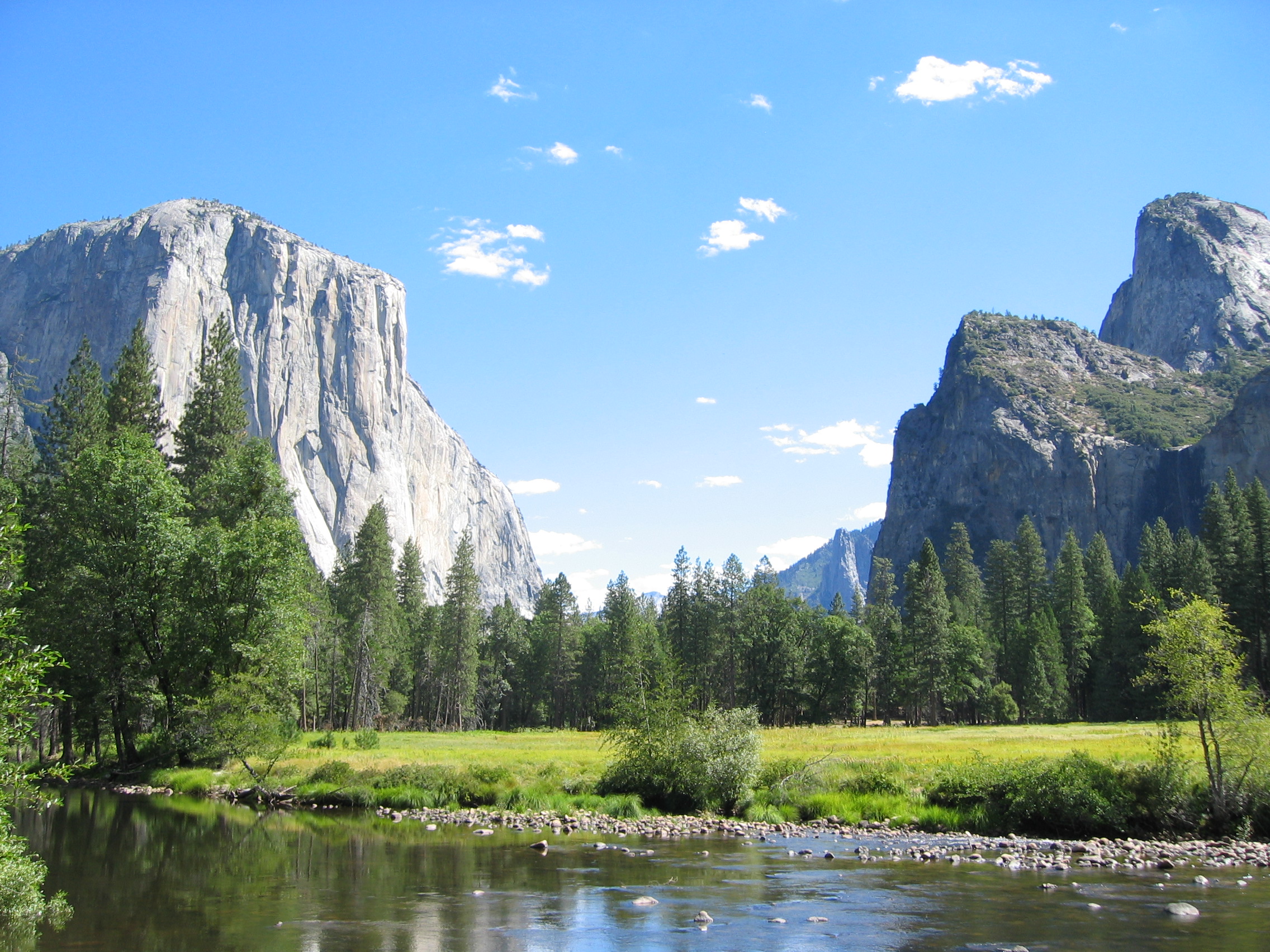
We picked the perfect time to be at Yosemite. All of the American schools were back by the end of last week, and we came straight after the Labour Day public holiday on Monday. This meant the valley was quiet (relatively), and all of the staff commented on how lucky we were. If we’d come in August we’d have been fighting for accommodation, food, parking spaces and space on the walks. Its really noticeable how much quieter the roads and hotels are, and of course the only children we tend to see now are either under 5, or foreign.
Our accommodation was okay, which really means it wasn’t okay. The standard of upkeep at Curry Village isn’t what it should be. Often the showers and toilets were pretty dirty, and inside the tents didn’t seem to be cleaned at all – at one point Sarah’s pillow fell off her bed, and got covered in a layer of dirt and yeuchy stuff. Perhaps the reason is that the camp is staffed by young students, mainly Russians, who are doing it for a gap year. If you were 21 again, how would you feel about clearing up for other people, when you really wanted to be down the pub? They facilities are also run by ‘Yosemite Concession Services’, a monopoly organization which doesn’t have any competition. All over the park there are signs saying that they charge reasonable prices, which I do agree with – the problem is that the quality of much of what they do is pretty poor. It reminds me of motorway services in England 10 or 15 years ago. We paid half price for our tent – if we were paying $70+ I’d be pretty dismayed. We met quite a few Americans who were, and they were either ready to complain or had already complained. (In fact, it was them that made use realise how poor things were – I’d kind of written it off as “Well, you expect lower standards when you’re in a tent”).
(Separately, while in the park I read that American unemployment is now running at a high level of 6%. Perhaps employing Russian students to staff restaurants, hotels, motels and visitor facilities in America’s Number One National Park could be part of the reason. But then I guess that’s the same anywhere – in London you find few reception staff in big hotels who are English – they’re all working down in Australia on their working visa’s there! I’ve just read what I’ve written - I must be reaching middle age.)
Of course there are mountains in Yosemite, and no trip would be complete with going up one and taking pictures. There is a big difference to last time we traveled. 10 years ago we were younger, fitter and didn’t have two small children with us. In New Zealand we were doing 50km hikes and climbing 1,600m mountains without too much preparation. But with the girls, we find that we’re really limited on what physical activity we can do with them. Normally we find that while one is ready to walk, the other isn’t – too tired, too hungry or just plain grumpy. Although we sometimes insist, and drag them along moaning and pleading, it does mean that it limits our options.
So
‘going up a mountain’ in Yosemite meant driving 30 miles up to Glacier
Point (to stand at the edge of a 1,000m vertical drop, 50m horizontally
from our starting point in the valley), rather than taking the four-mile
hiking trail.However, there are other things that we do that compensate. We all enjoy the wildlife spotting – in Yosemite there are lots of wild deer, that wander around the forests and meadows, and through the car parks. We also saw lots of squirrels and jays, which scavenge from the food. We saw raccoons one night, and a wild coyote strolling alongside the road twice. We didn’t see any bears, but there were plenty of bears around.
The bear problem in Yosemite is a big one – they are attracted to the valley floor by the amount of food available, and have learnt all kinds of tricks to get it. Signs all over the park warn you not to leave food unattended, and to always lock it into a bear-proof storage container. And cars don’t qualify! Food has to be taken out of cars, even the boot, and put into lockers provided in the car parks and camp sites. We weren’t allowed to store food in our tent (same reasons), and had another locker near the toilets (mmm, nice) to store food we wanted on the campsite. And we weren’t even allowed to temporarily take it up to the tent to eat it – it had to be eaten away from the tents. So we would end up eating breakfast on a picnic table near the restaurants rather than in our ‘room’. And these precautions didn’t extend just to food, but also to drink (Coke cans) and other fragranced items (like shower gel, toothpaste etc). It was a complete nightmare. It would be easy to think that they were paranoid about this, and being extreme, but the statistics speak for themselves – 800 cars a year broken into by bears in the park (‘broken into’ means that they’ll yank the doorframe away at the window, smash the window, and if the food’s in the boot, they’ll smash through the back seats into the boot). Some of them didn’t even have food in, but contained things like old food wrappers, crumbs in the car seats, or even the smell of a meal eaten in the car that evening! Somebody had warned us at Mammoth Lakes, and had told us to vacuum our car out before we went. Although we thought they were a bit over-cautious, we did it – and having seen what happens, I’m glad we did.
Anyway, a quick description of the photo above – the tube in the middle is a bear trap – they bait it, and leave it sitting around the car parks. If there’s a stray bear, it gets trapped inside the tube as it goes for the food (if you think that’s difficult to climb into, you’ve obviously not seen the film of a bear climbing in through the driver window of a Suzuki Swift). Then along come the Rangers, and sedate it and fix a bear collar onto it – this can then be picked up by radio receivers in the park – they then know when it comes too close to humans (like camp sites, and car parks), and can chase it away. While we were there they were trying to catch a bear that didn’t have a collar, and was causing damage overnight in car parks.
And, another picture…
We picked the perfect time to be at Yosemite. All of the American schools were back by the end of last week, and we came straight after the Labour Day public holiday on Monday. This meant the valley was quiet (relatively), and all of the staff commented on how lucky we were. If we’d come in August we’d have been fighting for accommodation, food, parking spaces and space on the walks. Its really noticeable how much quieter the roads and hotels are, and of course the only children we tend to see now are either under 5, or foreign.
Our accommodation was okay, which really means it wasn’t okay. The standard of upkeep at Curry Village isn’t what it should be. Often the showers and toilets were pretty dirty, and inside the tents didn’t seem to be cleaned at all – at one point Sarah’s pillow fell off her bed, and got covered in a layer of dirt and yeuchy stuff. Perhaps the reason is that the camp is staffed by young students, mainly Russians, who are doing it for a gap year. If you were 21 again, how would you feel about clearing up for other people, when you really wanted to be down the pub? They facilities are also run by ‘Yosemite Concession Services’, a monopoly organization which doesn’t have any competition. All over the park there are signs saying that they charge reasonable prices, which I do agree with – the problem is that the quality of much of what they do is pretty poor. It reminds me of motorway services in England 10 or 15 years ago. We paid half price for our tent – if we were paying $70+ I’d be pretty dismayed. We met quite a few Americans who were, and they were either ready to complain or had already complained. (In fact, it was them that made use realise how poor things were – I’d kind of written it off as “Well, you expect lower standards when you’re in a tent”).
(Separately, while in the park I read that American unemployment is now running at a high level of 6%. Perhaps employing Russian students to staff restaurants, hotels, motels and visitor facilities in America’s Number One National Park could be part of the reason. But then I guess that’s the same anywhere – in London you find few reception staff in big hotels who are English – they’re all working down in Australia on their working visa’s there! I’ve just read what I’ve written - I must be reaching middle age.)